
Last updated November 20, 2026
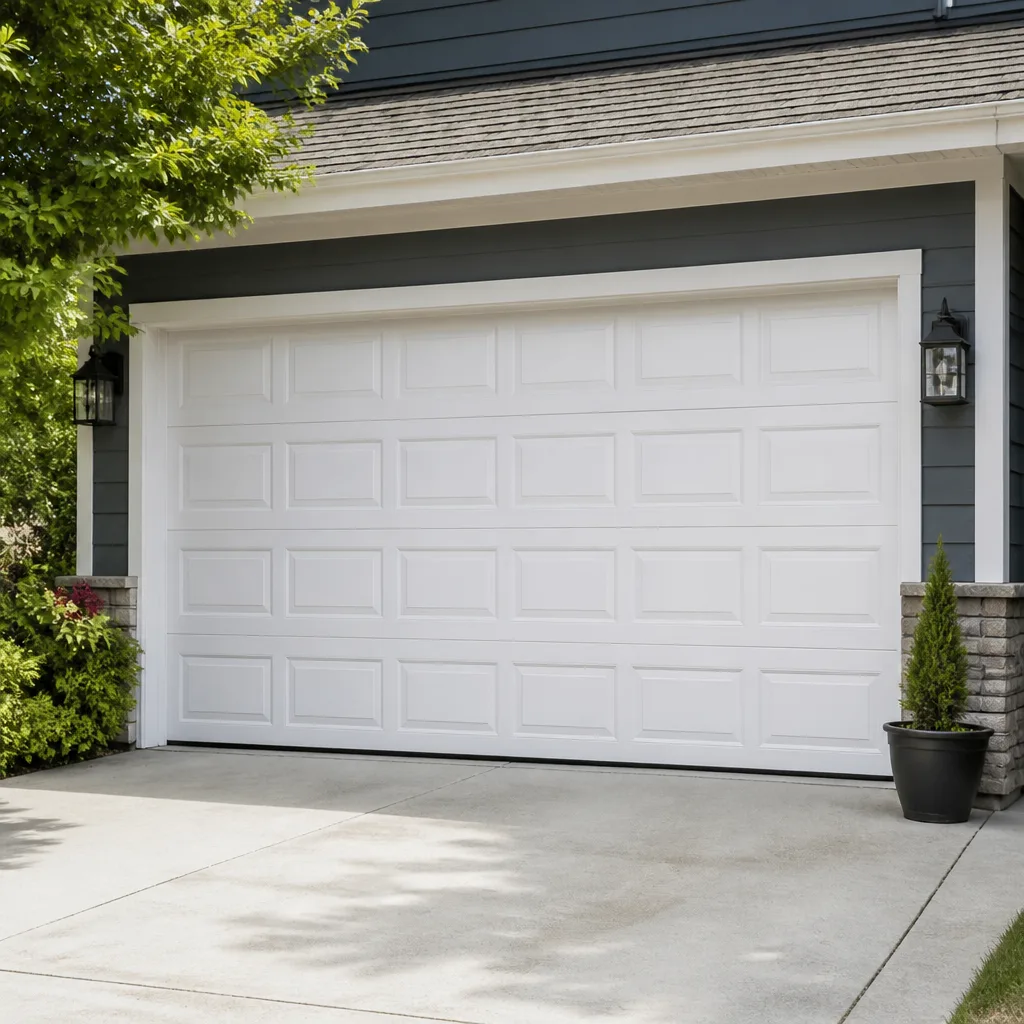 Raised-panel steel
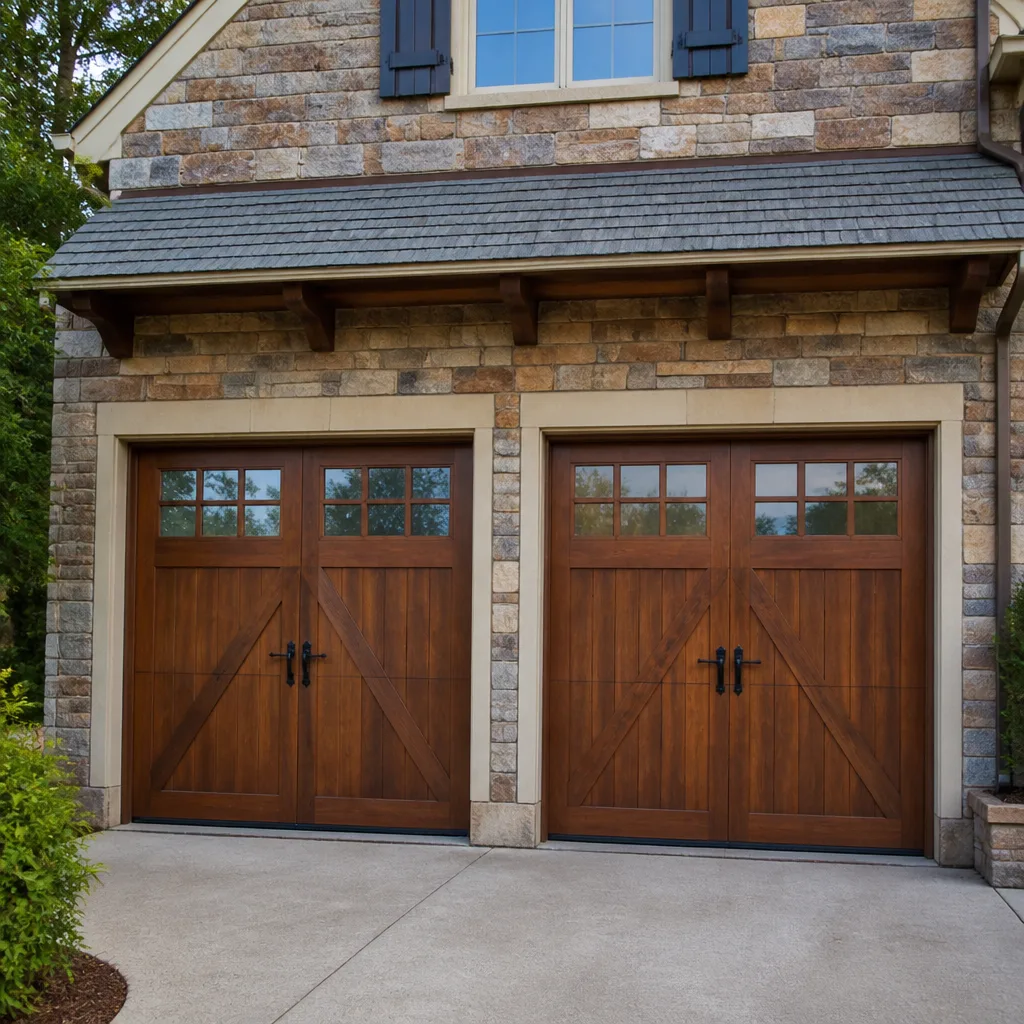 Carriage house
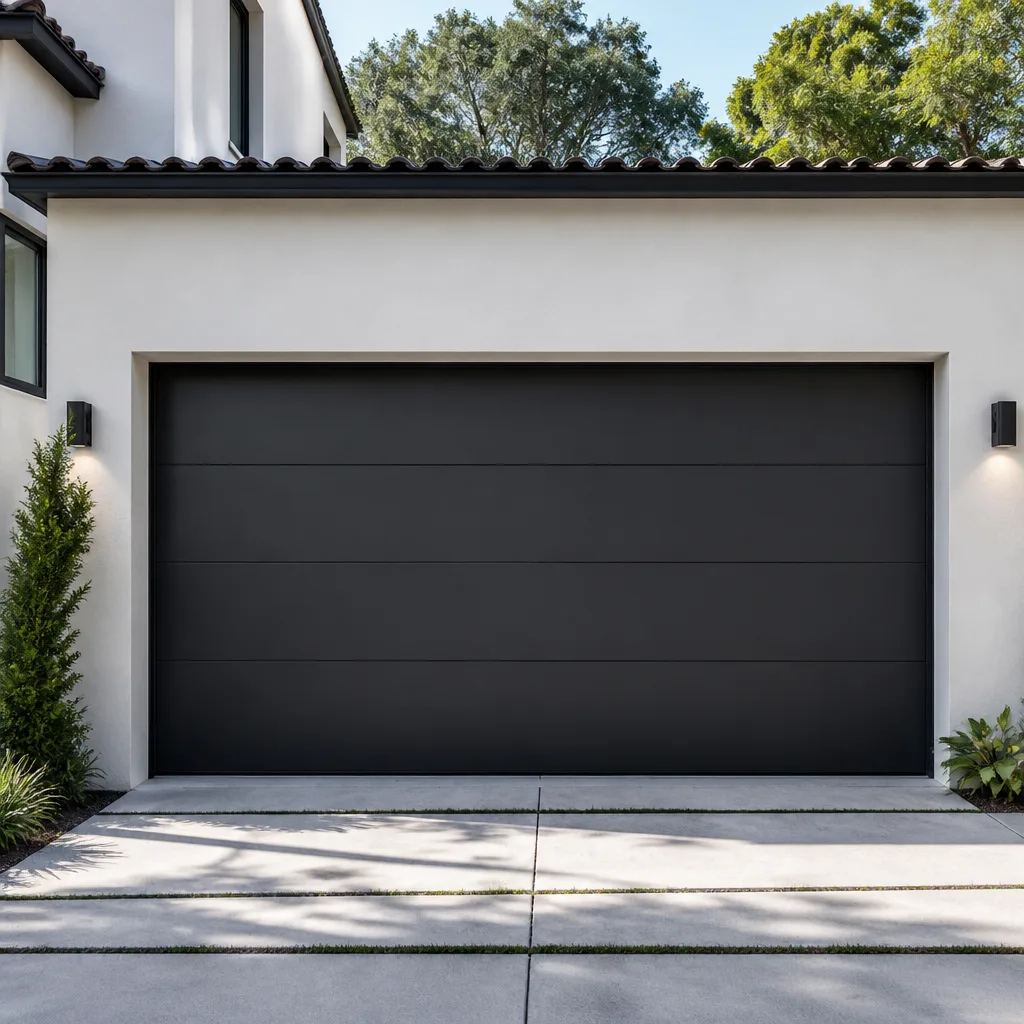 Modern flush
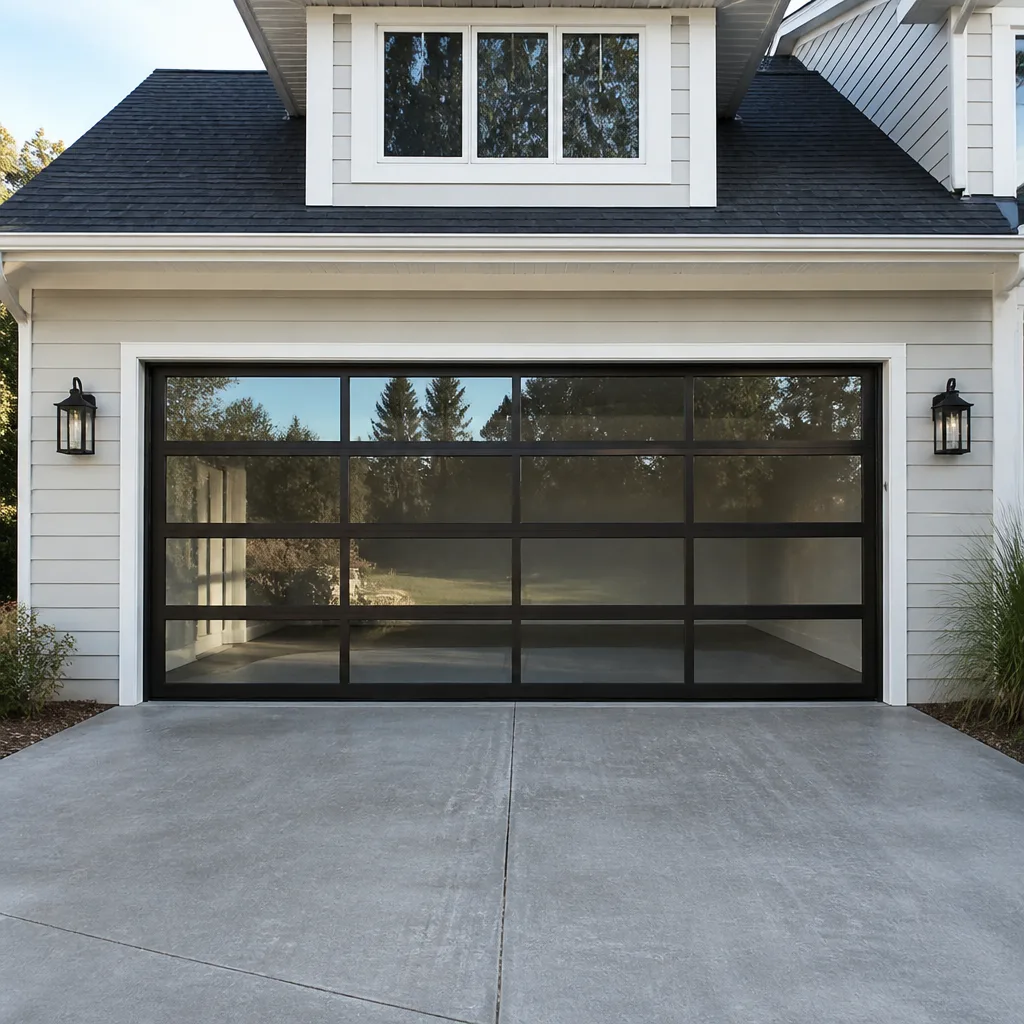 Full-view glass
 LiftMaster openers
 Chamberlain openers
Full 25-point door and opener safety check with every visit - springs, cables, rollers, tracks, and your LiftMaster or Chamberlain opener included
You get a price before we start. It does not change when the pro arrives.
Get your free estimateGarage Door Warning Signs: A Seven Hills Homeowner’s Reference Guide
Most garage doors that fail loudly gave plenty of notice first. The grinding, the slight heaviness when you lift the door by hand, the pause before it rises – these are the door telling you a component is wearing out, weeks before it stops working entirely. The trouble is that homeowners hear these sounds every morning for a month and file them under “normal aging.” That assumption is the difference between a scheduled repair and a door that won’t budge. This reference guide names each warning sign, explains which part is responsible, and assigns a risk level so you know whether to keep watching or stop using the door today. It’s written for Seven Hills homes, where the temperature swings put real stress on springs, cables and openers.
Quick Answer
A garage door that grinds, squeals, pops, moves crooked, reverses without an obstruction, or feels heavy to lift by hand is showing a warning sign that maps to a specific failing component. Treat grinding, popping and a door that won’t close evenly as stop-using signs, treat squealing and rattling as schedule-service signs, and call a professional for anything involving springs, cables or the door coming off its track. Most failures give days to weeks of warning before the door stops working.
Styles & brands we work with
- Raised-panel steel
- Carriage house
- Modern flush
- Full-view glass
- LiftMaster openers
- Chamberlain openers
Table of Contents
- Sound-Based Warning Signs: What Each Noise Tells You
- Visual Warning Signs You Can Spot From the Driveway
- Movement Warnings: Crooked, Slow and Reversing Doors
- What Your Opener’s Blink Codes Are Telling You
- The Three-Tier Risk System: Monitor, Schedule, Stop Using
- Why Seven Hills Weather Speeds Up Wear
- Monthly Walk-Around: A Numbered Checklist
- When Warning Signs Become a Repair Call
Sound-Based Warning Signs: What Each Noise Tells You
Sound is the earliest diagnostic tool you have, and the type of noise narrows the suspect part fast. Here’s how we read each one when a Seven Hills homeowner describes it to us over the phone.
- Grinding usually points to worn rollers or a dry, unlubricated torsion spring and hinge assembly. Metal-on-metal contact that gets louder along a particular section of travel is the classic sign. If the grinding started suddenly and comes with a jerking door, stop using it – that can be a cable starting to unravel.
- Popping or a loud bang from above the door nearly always involves the torsion spring or the torsion tube. A single sharp pop that leaves the door suddenly heavy means the spring has broken or is about to. That’s a stop-using sign, and the door should stay down until it’s inspected. Torsion springs are stored energy under high tension; they are not a component to inspect up close or handle yourself.
- Squealing is friction at the rollers, hinges or the opener’s rail. It’s rarely urgent on its own, but a door that keeps squealing wears the moving parts faster. Schedule it before the noise turns into a grind.
- Rattling is loose hardware – hinge bolts backing out, a bracket that’s worked free, or a panel fastener that’s let go. Rattling is worth a look because a loose bracket can eventually let the door hang crooked.
One useful habit: step into the garage while someone else runs the door and listen from a couple of feet away. The noise you’ve been tuning out from inside the car is often much clearer when you’re standing next to the track. If what you hear is a hard metal-on-metal grind or a pop, that’s your cue to stop operating the door and get it looked at.
Visual Warning Signs You Can Spot From the Driveway
A two-minute visual check catches the problems that haven’t started making noise yet. These are the things we look at on any Garage Door Repair Seven Hills visit, and you can spot them yourself without touching anything under tension.
- Frayed or kinked cables. The lift cables run down each side to the bottom corners of the door. A healthy cable is even and smooth. Frayed strands, a visible kink, or a cable that’s come loose from its drum is a stop-using sign – a snapped cable can let the door drop.
- Roller wear patterns. Look at the rollers in the track. A roller worn flat, cracked, or missing its bearing cover is a schedule-service sign. Worn rollers are also a common cause of a door that runs louder on one side.
- Spring gaps. Look at the torsion spring across the top of the door. A gap or a clear break in the coil means the spring has failed or is failing. If you see a gap, stop using the door and call for spring repair rather than pushing the opener through it.
- Bent or cracked panels. Small dents or stress cracks at the hinge points tell you the door is taking impact or has shifted in its tracks. Left alone, a bent section can throw the whole door out of alignment.
- Uneven track. The vertical and horizontal track should be straight and securely bolted. A track that’s pulled away from the wall frame or visibly bowed is a schedule-service sign – and if the door has actually jumped a roller, stop and call.
If you have a Clopay or Amarr steel door, panel fasteners and seam lines are worth a glance too, since those doors can develop small gaps at the seams after years of expansion and contraction. It’s not a defect, just a wear point to watch.
Movement Warnings: Crooked, Slow and Reversing Doors
The way a door moves tells you as much as the way it sounds. Three patterns come up again and again.
- The door is crooked on descent. If one side reaches the floor before the other, the cause is usually a stretched or mis-wound side cable, a worn roller on one side, or a track that’s out of plumb. Crooked travel stresses the panels, and a door that runs crooked for long enough can bind and stop. Schedule it, and stop after a couple of cycles if it gets worse.
- The door reverses without an obstruction. If the door hits the floor and immediately goes back up, or reverses mid-travel with nothing in the way, the opener’s force setting is too high or the safety sensors are misaligned. This is a common garage door opener repair job. It’s a schedule-service sign unless the door is doing it intermittently in a way that makes you nervous around it, in which case stop and call.
- The door moves slower on one side. This usually traces back to binding in one track or a failing roller, not to the opener itself. If the door is heavy to lift by hand when you disengage the opener (pull the release handle only with the door closed), that points to spring tension, and that’s a stop-using sign – leave it closed and call.
Doors with a Genie opener sometimes show these behavioral warnings while the opener itself still sounds healthy, which is why it’s worth watching the door’s movement rather than relying on the motor’s sound alone.
What Your Opener’s Blink Codes Are Telling You
Your opener’s blinking lights are a built-in diagnostic panel, and most homeowners never read them. Here’s the practical version for the dominant platforms we work on.
On LiftMaster and Chamberlain units (which share the same myQ-connected architecture), a repeating blink pattern on the main light or the safety sensor LED points you toward a specific fault. A sensor that stays solid amber usually means it has power but the beam isn’t reaching its partner; a sensor that blinks tells you it’s misaligned or blocked. The door reversing on its own with a working sensor usually means the opener is sensing too much resistance and the force adjustment has drifted – often a sign of worn rollers or a door that’s starting to bind. LiftMaster and Chamberlain also typically flash the main light a set number of times to report a force or travel-limit fault, and the manual that came with the unit is the right place to match the exact count to its meaning.
A few behaviors worth noting regardless of brand:
- Opener runs but the door doesn’t move. Look for a broken spring, a snapped cable, or a release that’s still pulled. On a spring or cable issue, stop using the opener – running it against a dead spring can damage the motor too.
- Opener clicks but nothing happens. This often means a dead logic board or a locked-up motor, and it’s an opener repair rather than a door repair.
- Travel limit drift. If the door stops short of the floor or doesn’t open fully, the opener’s travel limits have moved. It’s adjustable, but if it keeps drifting after an adjustment, the door itself is likely binding.
If you’re not sure what your unit is telling you, note the blink count and the make, then call. We work on the opener already in your garage across eight major brands, so the make and model is usually all we need to start.
The Three-Tier Risk System: Monitor, Schedule, Stop Using
Every warning sign in this guide lands in one of three buckets. Use them to decide how urgently to act.
- Monitor. Minor rattles, occasional squeaks, a small dent in a panel with no effect on travel. Keep an eye on it, do the monthly walk-around, and note if it gets worse. No call needed yet.
- Schedule. Persistent squealing or grinding, worn rollers, a door that runs slower on one side, force-setting issues on the opener, a track that’s slightly out of plumb. These won’t fail today, but they wear faster the longer they run. Book a repair while the door still works.
- Stop using. A broken or gapped torsion spring, a frayed or snapped cable, a door that’s come off its track, a door that’s visibly crooked or dropped on one side, a door that reverses with no obstruction and gets worse each cycle. Stop operating the door, keep it closed if you can, and call for repair. Don’t run the opener against a dead spring or a dropped door – it can turn a spring job into a motor job too.
If any warning sign points to a spring or cable, the right move is not to climb up and check it yourself. Torsion springs and lift cables hold stored force that can cause serious injury if they let go while you’re near them. A trained technician has the winding bars, the clamps and the experience to handle that safely. When in doubt, treat it as a stop-using sign and let a professional confirm it.
Why Seven Hills Weather Speeds Up Wear
Seven Hills sits at the edge of the Front Range foothills, and that setting works your garage door harder than a lot of homeowners realize. The big swings matter most – warm afternoons followed by cold nights are the enemy of a torsion spring, because the metal expands and contracts with each shift. Over a season, that cycling is what eventually fatigues a spring until it breaks.
Cold snaps also stiffen the lubricant on rollers and hinges, so a door that ran quietly in the summer can start grinding the first cold morning. And the dry air that’s common here pulls moisture out of wood frame components around the door opening, which can shift the track slightly out of plumb. None of this is unique to your house – it’s just what a foothills climate does to a moving metal assembly. The practical takeaway: check the door more often in the shoulder seasons, when the temperature swings are largest, and don’t ignore a new noise that showed up with the first cold snap.
Monthly Walk-Around: A Numbered Checklist
Five minutes once a month catches most of what this guide describes. Do it with the door closed and the opener disengaged only if you’re comfortable testing the manual lift.
- Listen. Run the door from the garage and listen for grinding, popping, squealing or rattling. Map each noise using the section above.
- Watch the travel. Does the door rise and lower evenly, or is one side lagging? A crooked door is your earliest sign of cable, roller or track trouble.
- Look at the springs. From the floor, check the torsion spring for a gap or break. Don’t reach up or touch it – just look.
- Check the cables. Look at the lift cables at each bottom corner for fraying, kinks or slack. Any of those means stop and call.
- Inspect the rollers and hinges. Worn, cracked or wobbly rollers are a schedule-service sign. Loose hinge bolts are worth tightening.
- Test the safety reverse. Put a solid object in the door’s path and confirm it reverses. A door that doesn’t reverse needs opener attention before it’s used again.
- Read the opener lights. Glance at the safety sensor LEDs and note any blinking pattern so you can describe it if you call.
That checklist catches the majority of developing problems. If you’d rather have a professional run it, that’s a reasonable reason to book a visit – free estimates make it easy to get an expert set of eyes on the door.
When Warning Signs Become a Repair Call
The line between “I’ll watch it” and “I’ll call” is rarely fuzzy once you use the three-tier system. If a sign lands in the stop-using bucket, call today. If it’s in the schedule bucket, book it before the next season change. And if you’re genuinely not sure, describe what you see and hear to someone who works on these doors every day.
We handle the whole lifecycle in Seven Hills – springs, cables, rollers, tracks and openers through to a full garage door installation when the door itself is past saving. Because we carry and sell garage door parts directly, a repair that needs a component replacement doesn’t sit waiting on an order. Our technicians have up to 15 years of experience, and they’re factory-familiar with the brands already in your garage – LiftMaster, Chamberlain, Genie, Clopay, Amarr, Wayne Dalton, Craftsman and Raynor. We’re a garage door specialist, not a generalist, and that focus is why spring work and opener diagnostics are routine for us rather than a referral.
If a warning sign has you wondering, the fastest way to get an answer is a call. Describe the noise and the movement, and we can tell you whether it’s a monitor, schedule or stop-using situation before we ever arrive.
Common Mistakes to Avoid
- Treating a new noise as normal aging. A door that starts grinding didn’t always grind, and the change is the signal. Waiting for it to fail turns a routine roller or lubrication job into a bigger repair.
- Running the opener against a dead spring. Once the torsion spring breaks, the opener is pulling the full weight of the door. That’s how a spring repair becomes a spring plus motor repair.
- Adjusting the force setting to force a sticky door closed. Cranking up the opener’s force to push through resistance hides a binding door and wears the motor. Find the cause instead.
- Trying to inspect or adjust springs and cables yourself. These parts hold stored energy and can cause serious injury. Leave anything under tension to a trained technician.
- Ignoring a crooked door because it still opens. Crooked travel stresses panels and tracks, and it’s usually the first sign of a cable or roller problem. It doesn’t fix itself.
- Skipping the safety-reverse test. A door that won’t reverse is a hazard to anyone in its path, kids and pets especially. Test it monthly.
- Letting a small panel dent go unchecked at the hinge points. In a Seven Hills climate with big temperature swings, a stressed panel can spread into a seam gap or a bent section over time.
See the difference
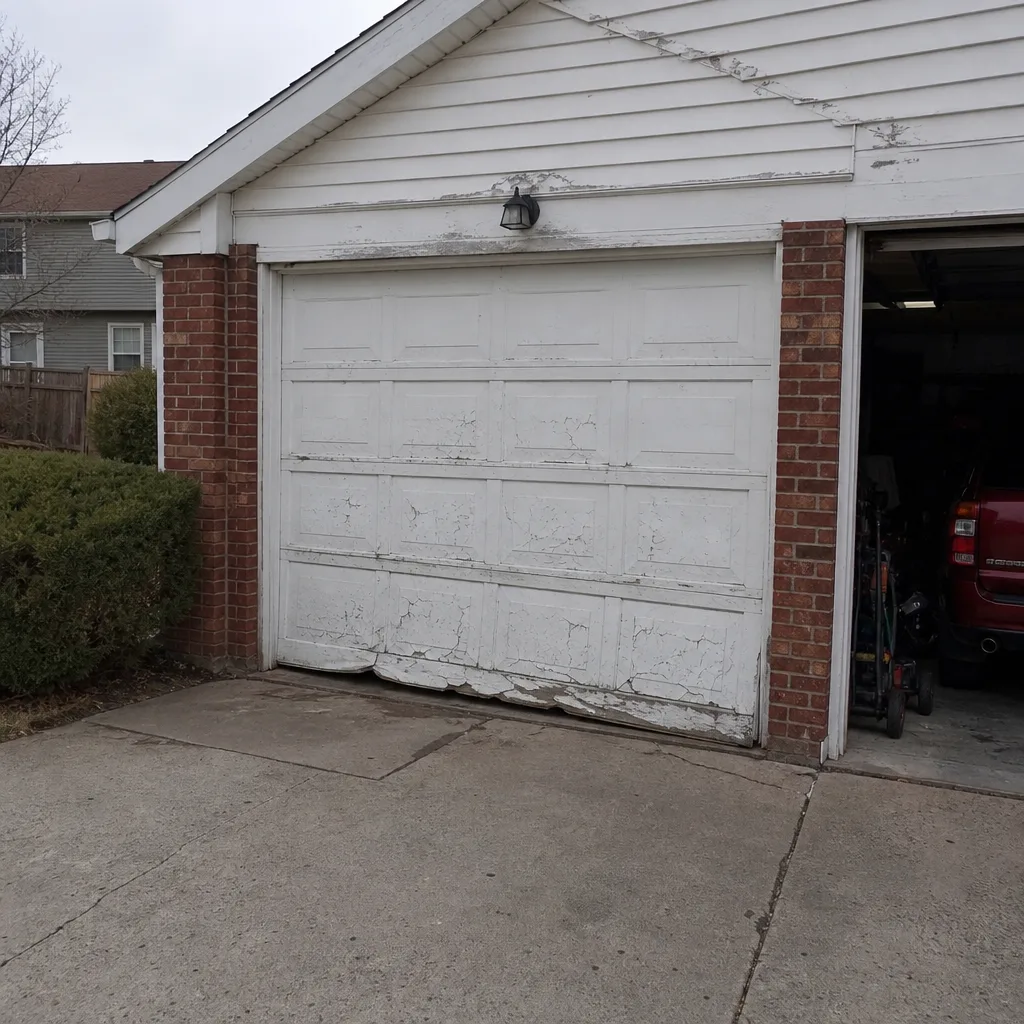 Before
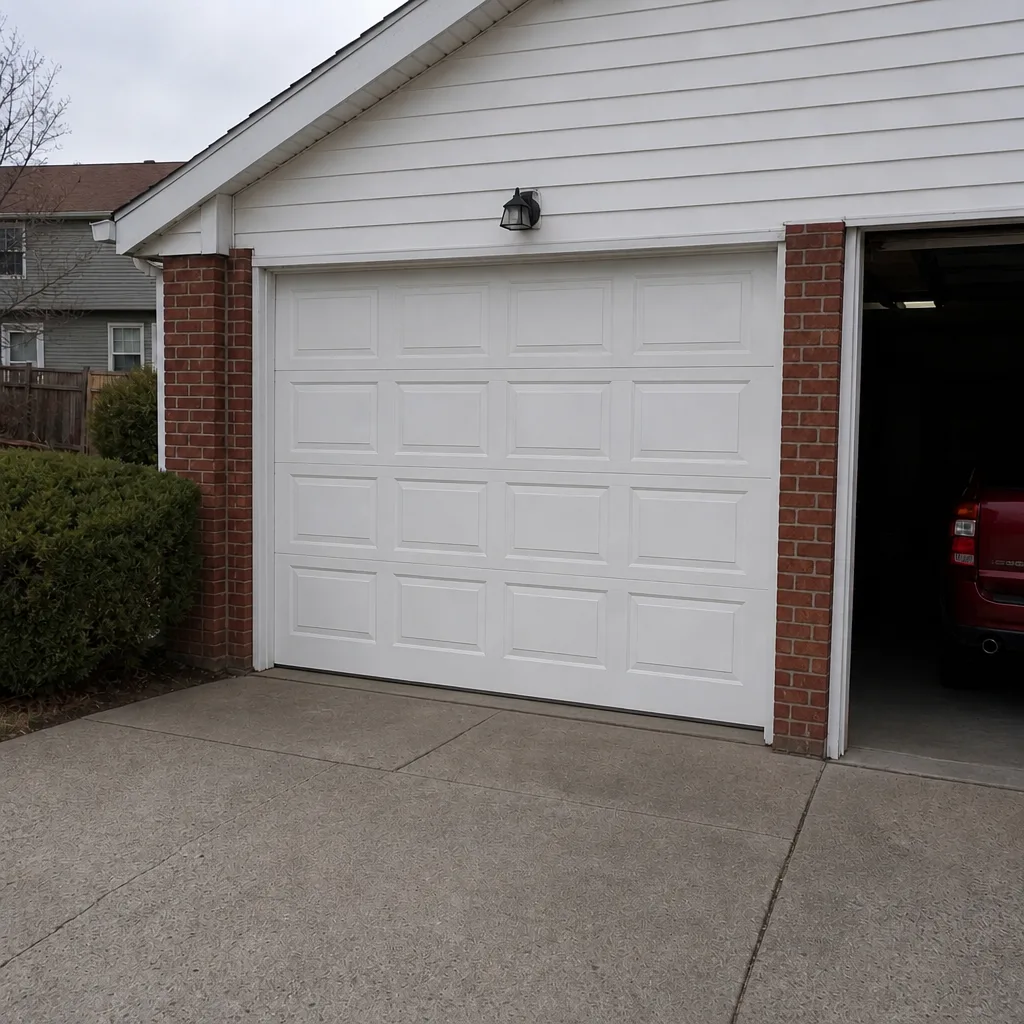 After
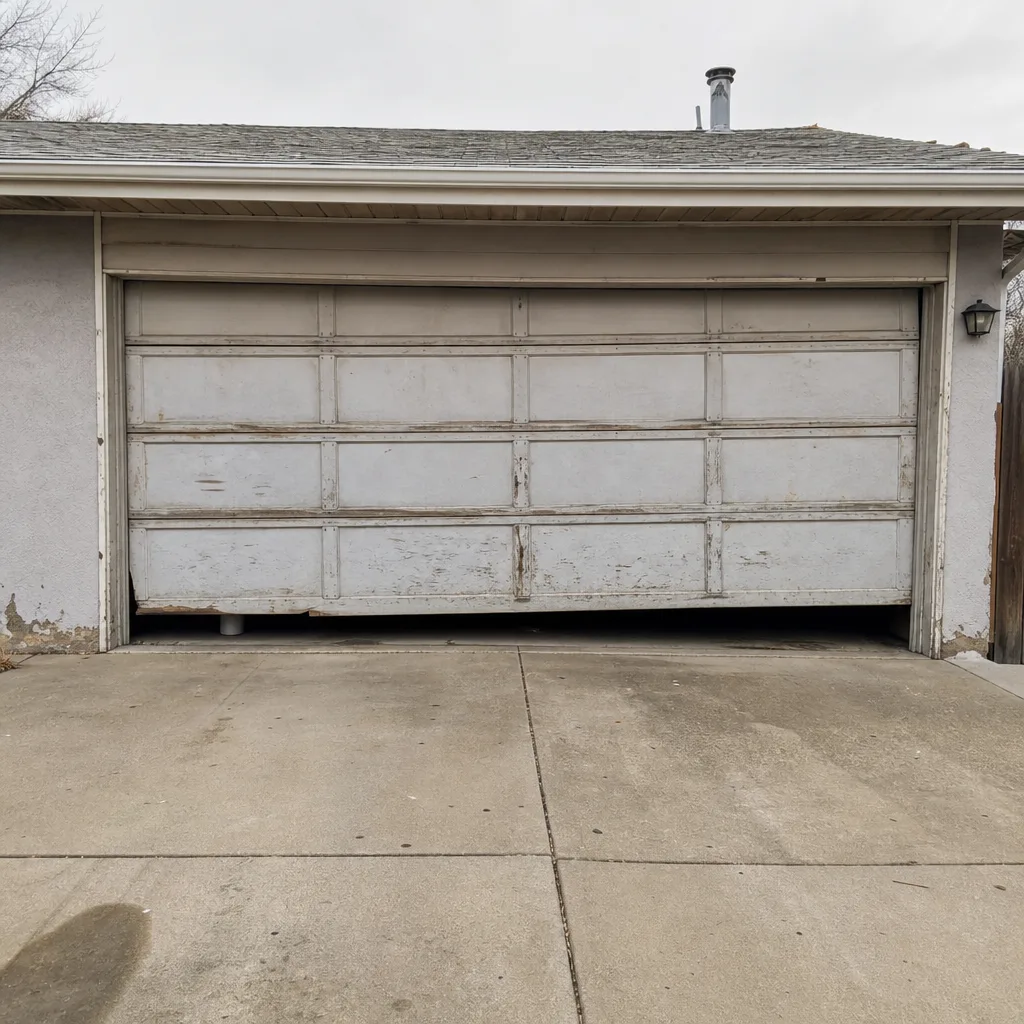 Before
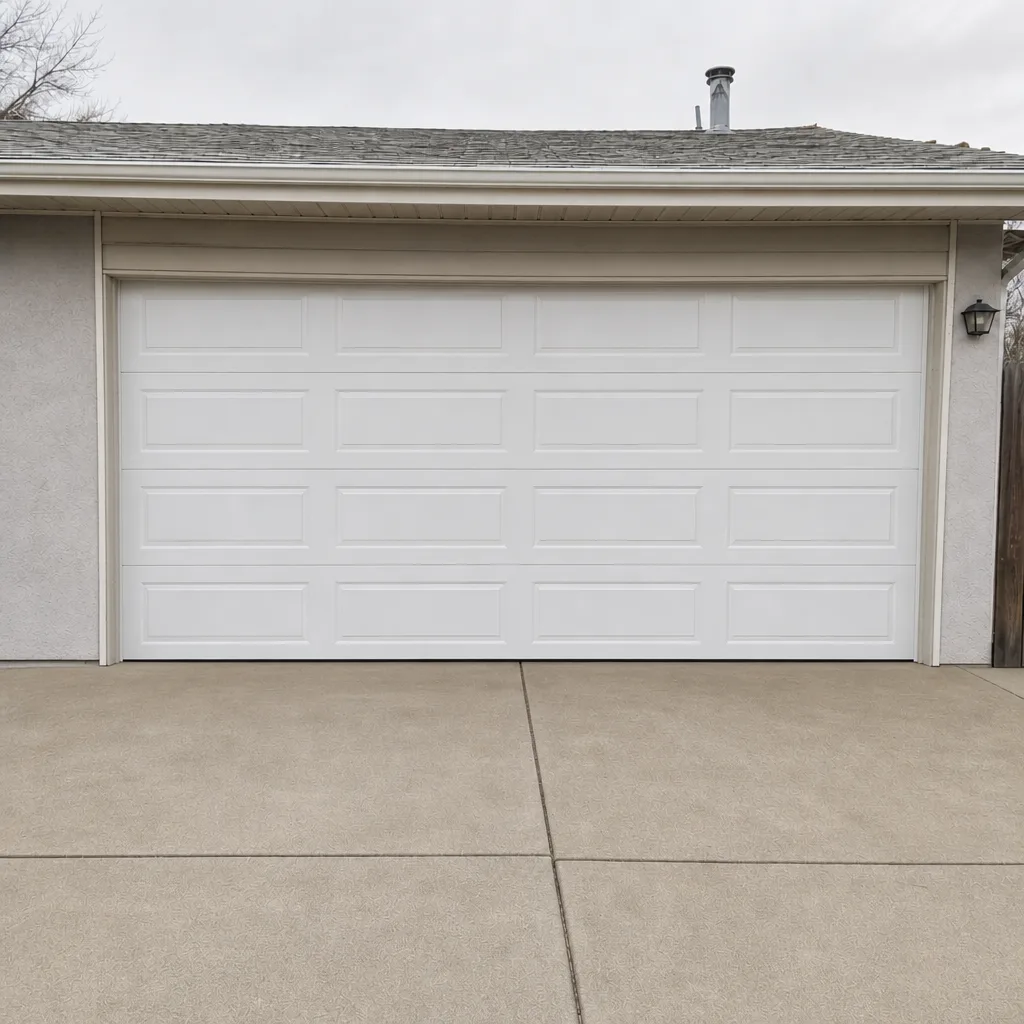 After
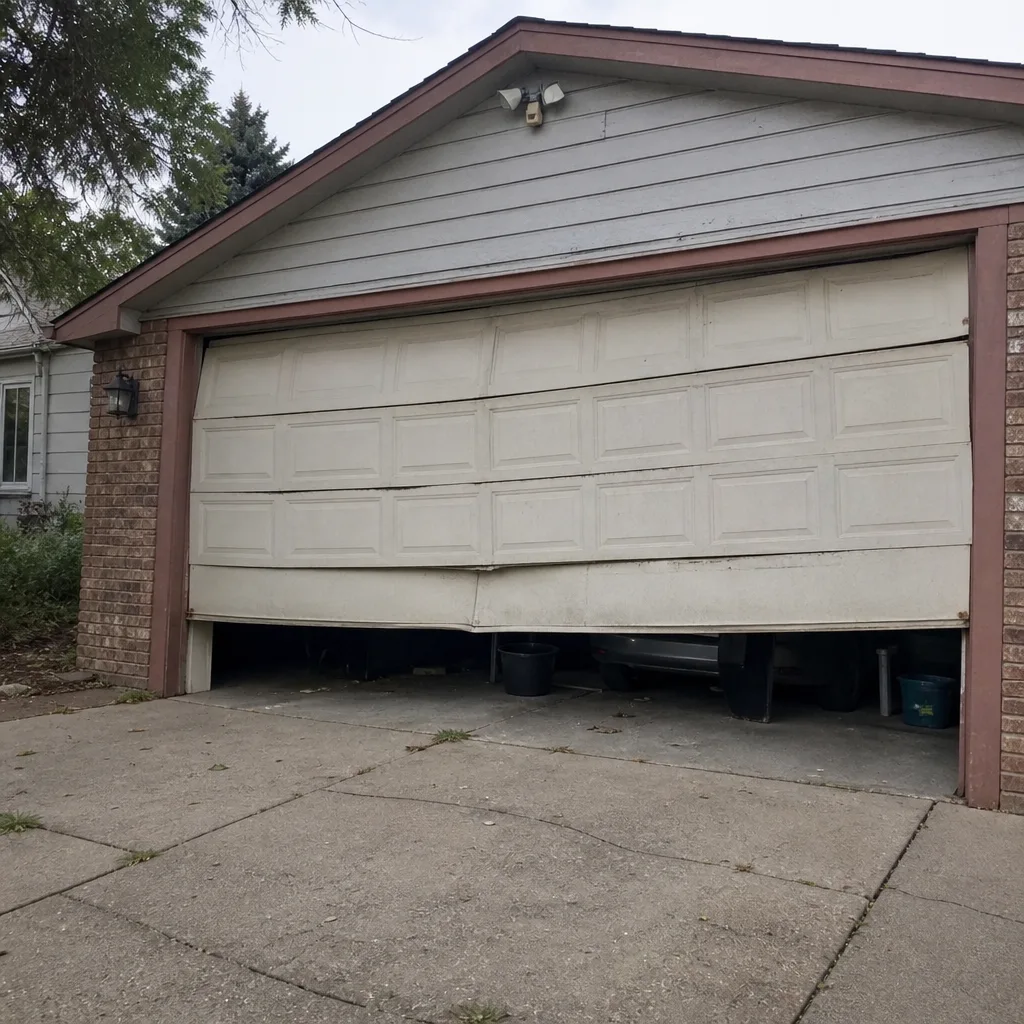 Before
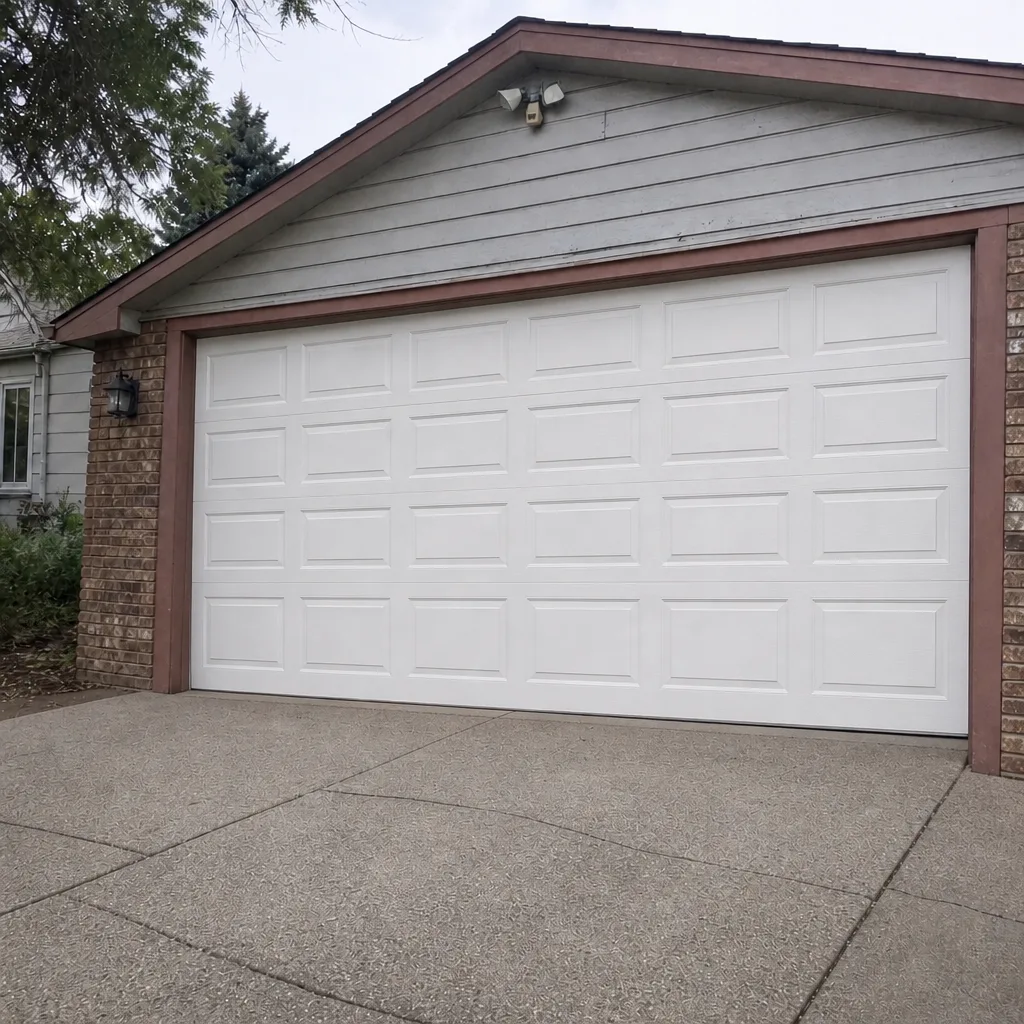 After
When to Call a Professional
Call a professional for any warning sign involving springs, cables, tracks or a door that’s dropped or come off its rails. Those are the jobs where stored energy or the full weight of the door is involved, and where a mistake can cause injury or turn a small repair into a large one. Call sooner if the door reverses on its own, runs crooked, or makes a hard grinding or popping noise. For opener faults and worn rollers, a scheduled visit is usually enough. Garage Door Repair Seven Hills offers free estimates in Seven Hills – call (844) 443-4563. We answer 24/7, and fast dispatch from 7am to 7pm, Sunday through Friday, means a real person can help you sort a stop-using sign from a monitor one and get a technician out when it matters. We quote the price before any work starts, so you know the number before we touch the door.
Frequently Asked Questions
A door that feels heavier to lift by hand is the sign most often dismissed, and it usually points to a torsion spring losing tension. Test it with the door closed and the opener disengaged. If it takes real effort to lift, stop using the door and call – a failing spring is the repair most likely to become an emergency.
Occasional light grinding that comes and goes is usually worn rollers or dry hinges and can be scheduled. A hard, continuous grind paired with a jerking or slowing door is a stop-using sign that can indicate a cable problem. If you can’t tell which, describe the sound to us at (844) 443-4563 and we’ll help you sort it.
The blink pattern is the opener reporting a specific fault, usually a force overload, a travel-limit drift or a safety-sensor misalignment. The count of blinks maps to the fault in your unit’s manual. If you’d rather not decode it, note the blink count and the model and call us – estimates are free.
No. Once a torsion spring breaks, the opener is lifting the full weight of the door, and running it can damage the motor and put strain on the cables. Leave the door closed and call for repair. Call (844) 443-4563 for a free estimate.
It’s usually a schedule-service sign – the opener’s force setting is too high or a safety sensor is out of alignment. If it happens every cycle and the door is acting unpredictably, stop using it and call. Either way, the fix is straightforward opener repair, and we’ll quote it before any work starts.
Yes, the foothills temperature swings are the main culprit – warm days and cold nights work the torsion spring through constant expansion and contraction, which shortens its life. Cold snaps also stiffen roller lubricant, so new noises often show up with the first cold morning. A monthly walk-around catches most of it early. Call (844) 443-4563 for a free estimate if something’s changed.
The Bottom Line
Garage doors rarely fail without warning. A grind, a pop, a door that feels heavy, a crooked descent or a blinking opener light are all messages from a specific component that’s wearing out. Read them against the three-tier system: monitor the minor stuff, schedule the persistent noises and movement problems, and stop using the door for anything involving springs, cables or a door that’s dropped. The cost of ignoring a warning is always higher than the cost of a scheduled repair. If you’re in Seven Hills and something’s changed with your door, the fastest way to a confident answer is a call – the estimate is free, and we’ll tell you plainly whether you’re looking at a monitor, schedule or stop-using situation. Call (844) 443-4563. We answer 24/7, and fast dispatch from 7am to 7pm, Sunday through Friday, gets a technician out when you need one.
Written by the team at Garage Door Repair Seven Hills.